tongtong
What Are We Selecting When We Select
Studium: MA Digital Communication Environments
Jahr: 2026
Name: tongtong
Mentor:innen: Dr. Arno Schubbach, Jiri Oplatek, Prof. Michael Renner
Instagram: @tongtong.o0
Selection in digital interfaces usually requires only a click, drag, or marquee selection. The object is immediately highlighted, and the system confirms the target of the next action. Although this process appears direct and smooth, it depends on an established object structure. Files, layers, buttons, and clickable areas are assigned names, boundaries, attributes, and hierarchical positions before any operation takes place.
This Master’s thesis describes such prior organisation as boundary-setting work. The research asks what forms of friction emerge when digital selection is transferred into physical space and applied to physical objects. It also examines what hidden assumptions this friction reveals about objects, boundaries, and operability.
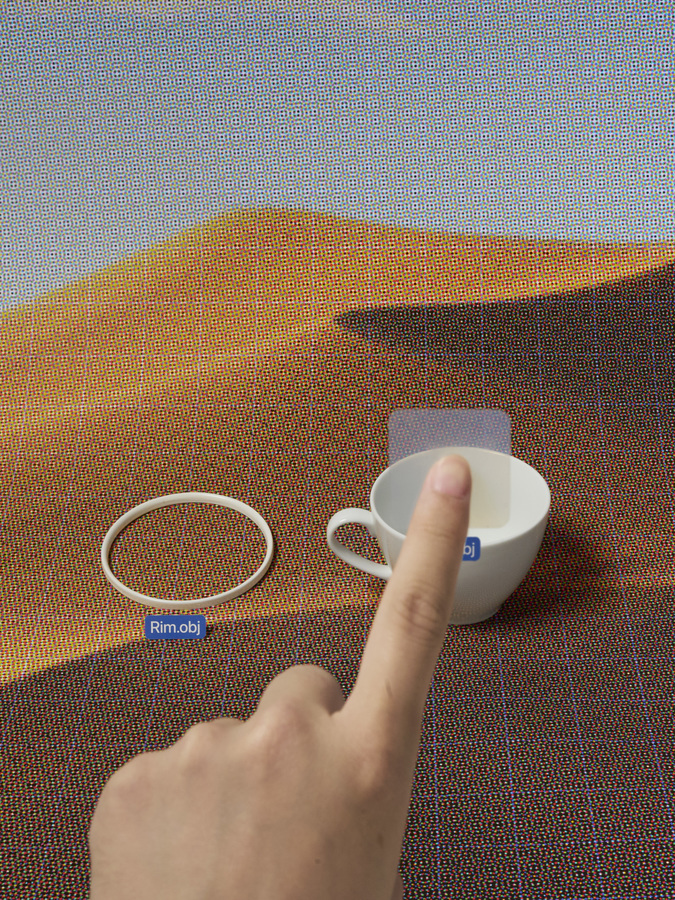
Using a practice-based approach, the grey selection frame of the interface is relocated into physical space as an experimental method. Objects are selected through their structures, attributes, and spatial relations, while the results are reorganised into folders and subfolders. Pauses of the hand, positional adjustments, and conflicts between classifications become materials for analysis.
The research finds that selection can be understood as boundary-making. Digital selection appears certain because the system has already defined what can become an object and at which level an action can occur. Physical objects provide no equivalent ready-made division, so the body must reconsider wholes, parts, attributes, and relations. Friction returns these judgements to the moment of action and makes hidden segmentation work visible. It therefore becomes a research method for examining how object boundaries are decided, fixed, and concealed.