Greta Engelhardt
THINGS LEFT UNSAID
Studium: BA Mode-Design
Jahr: 2026
Mentor:innen: Prof. Priska Morger
Credits: @anil_sarikaya (Performance Trailer), @bylauragauch (Look Photos, Video Process Documentation), Nicola Maurizio Reisch (Support)
Instagram: @margaretagrrreta
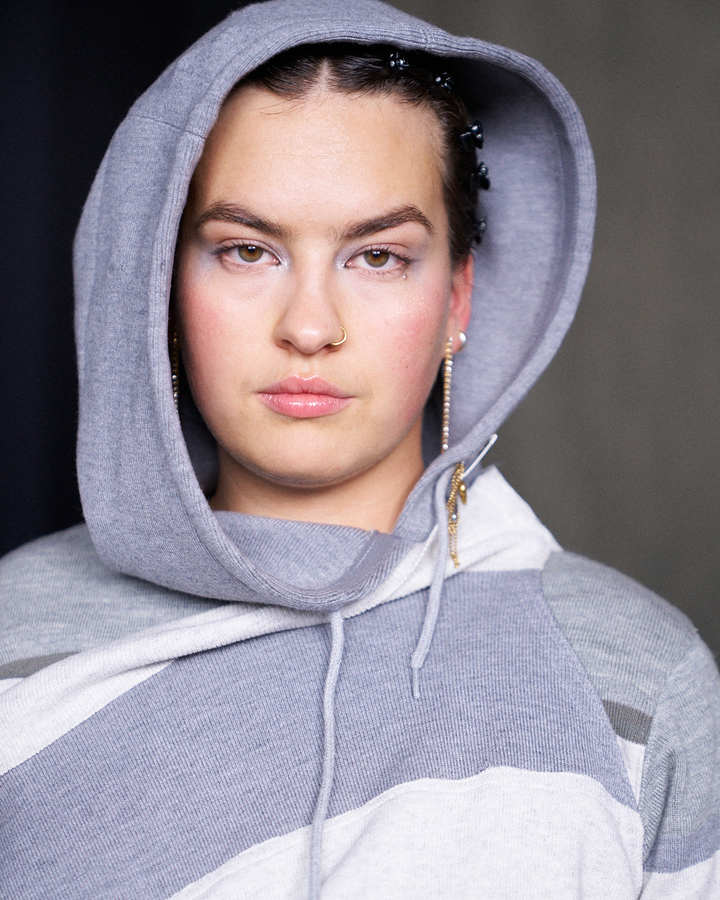
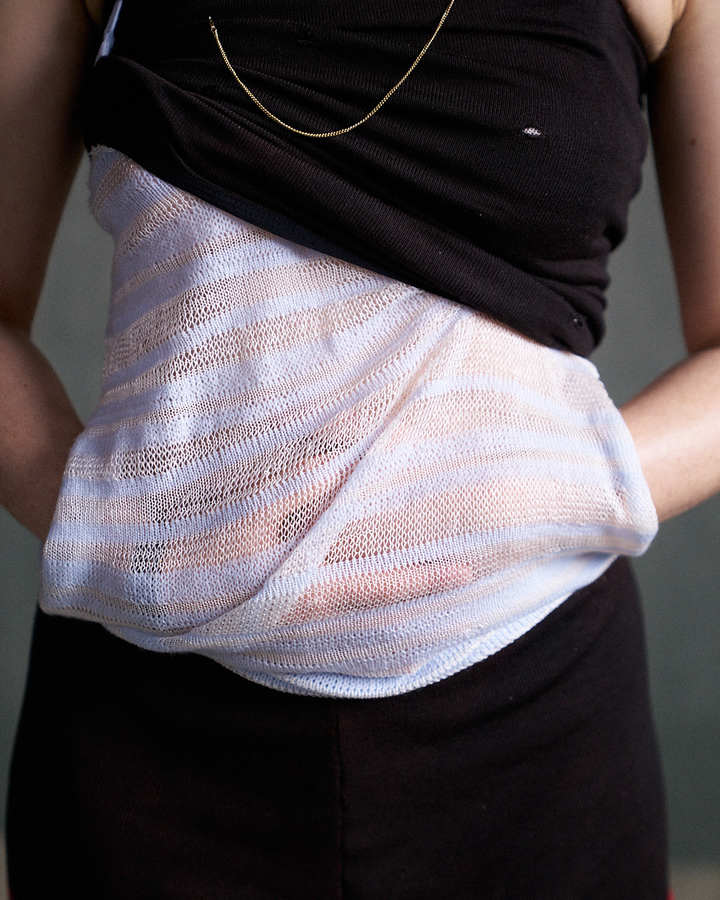
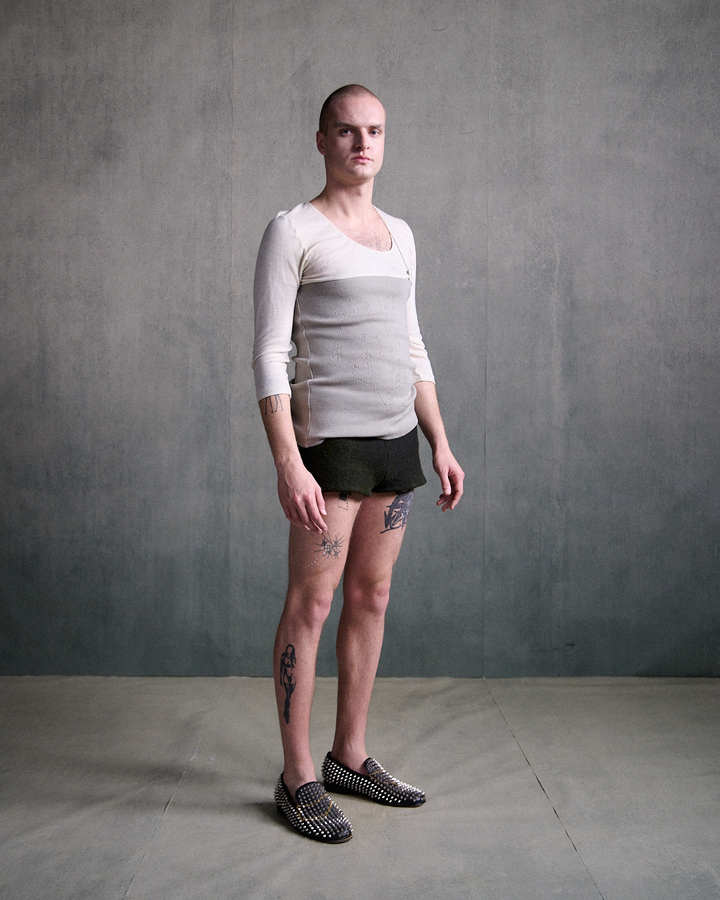
K N I T ( T E R ) E D / S T( R E ) T C H E D / M A S H ( I N ) E D / R O W ( E D )
When wearing our everyday clothes we actually pay little attention to them and quickly forget about their textures, the work that went into making them and the meanings they carry. Especially with flexible garments, usually the first layer on our skin, we forget that they are knitted.
Taking a closer look at them may seem uninteresting to many and the garments unworthy of attention. Yet, they tell us not only a lot about the people wearing them but also generally about the development and history of individual items of clothing. Even with seemingly ‘simple’ clothes, their production is deeply rooted not only in personal contexts, but also in cultural and historical ones and are able to hold up a political and social mirror to us by taking a closer look. The sequence of seams, thread runs and individual stitches alone tell us a lot about the background of a garment.
Like the craftsmanship of making clothes, our personal connections to past generations tend to be also quickly forgotten. In particular stories of people who used to make clothes by hand such as our grandmothers and great-grandmothers often remain hidden and untold. Yet, we may still find knitted socks, repaired holes or embroidered letters which will remind us of them.
In my Bachelor’s thesis I use fragments of stories and memories to examine how bodies, fashion, textile practices, and spaces intertwine. It is guided by threads and told in knit to highlight the ambivalences and transitional moments of craftmentship and the everyday observations surrounded by untold stories.